First Used: 1956
Inspiration: Based on the Shield of Arms and Coat of Arms of New Brunswick, and the Beaverbrook Barony Crest and Coat of Arms.
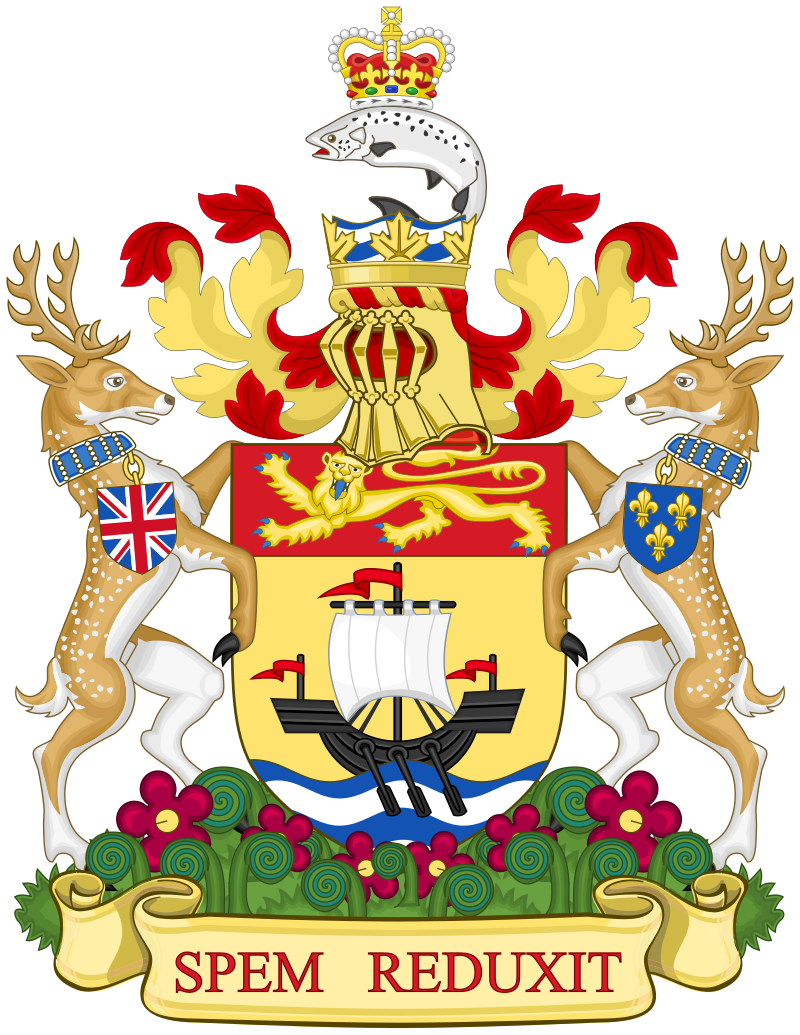
New Brunswick Coat of Arms: The New Brunswick Shield of Arms was granted by Queen Victoria in 1868. The upper third of the shield is red, with a gold lion, symbolizing New Brunswick’s ties to Britain and connection to the royal House of Hanover’s Duchy of Brunswick in Germany, after which the original colony was named. The ancient galley in black celebrates and symbolizes the Maritime location and early ship building prominence of the province.
The crest and motto were assigned by Order of the Lieutenant Governor in Council in 1966. Spem reduxit means "hope restored" and refers to the province's having acted as a haven for Loyalist refugees who fled there during and after the American Revolution. Other features were assigned by Royal Warrant of Queen Elizabeth II on Sept. 24, 1984, during a visit to Fredericton to honour the 200th anniversary of New Brunswick's creation.
The shield is supported by two white-tailed deer wearing collars of wampum. From one collar is suspended the Royal Union Flag, from the other the arms of Royalist France, to indicate the province's British and French background. The crest above the shield features an Atlantic salmon leaping from a coronet of gold maple leaves and bearing St. Edward’s Crown on its back. The coat of arms’ base is a grassy mound with fiddleheads and purple violets, the provincial flower.
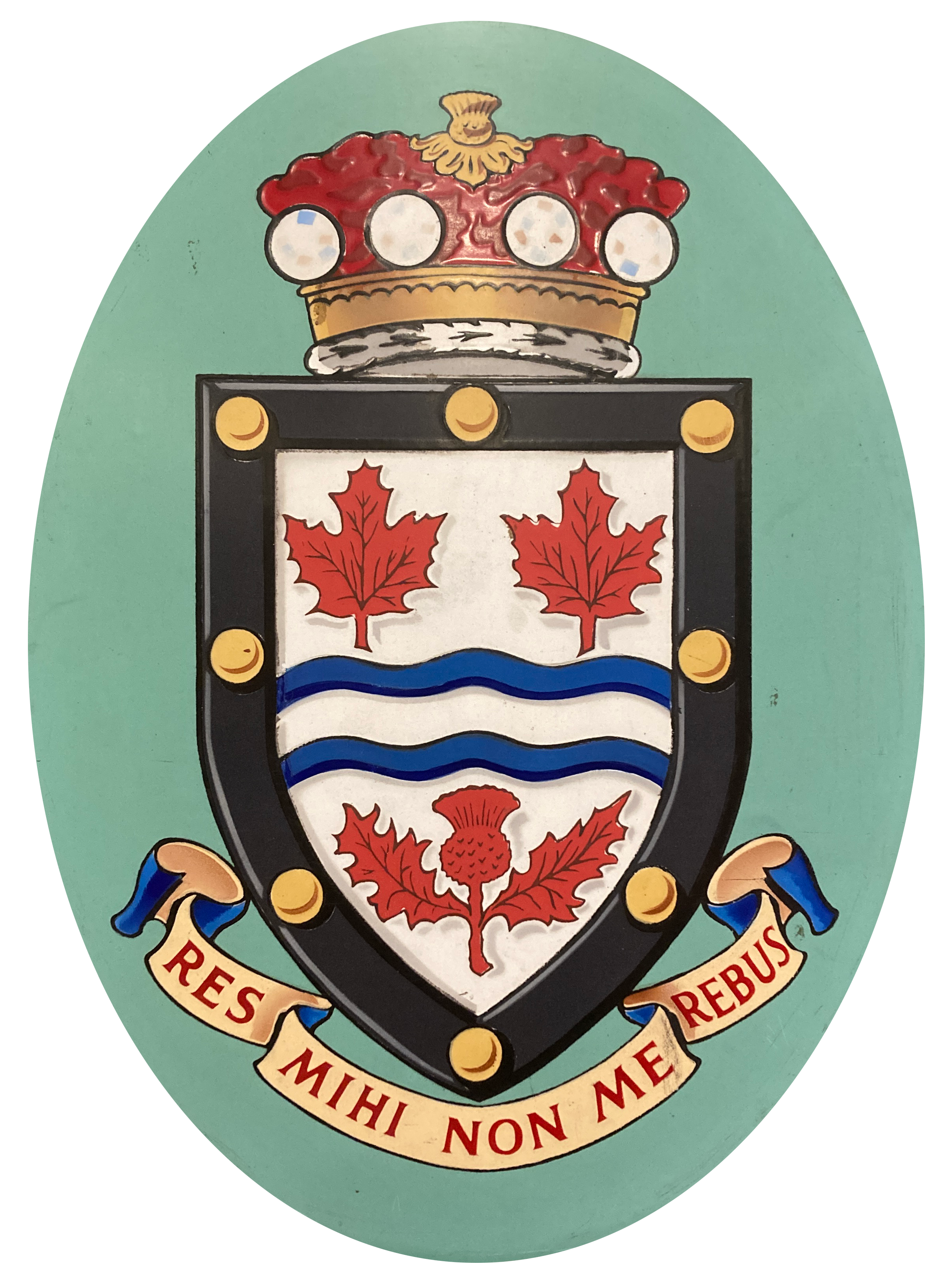
Beaverbrook Barony Shield of Arms and Crest: In 1911 William Maxwell Aitken was knighted Sir Max by King George V. In 1917 he was given peerage as 1st Baron Lord Beaverbrook, a title reminiscent of the Miramichi region (specifically, Beaverbrook Stream) where he grew up. The Barony Sheild of Arms and Crest consists of two red maple leaves and a red thistle separated by two wavy blue barrulets. The black border is inlaid with gold coins. It is topped with the Coronet of a British Baron/Life Peer.
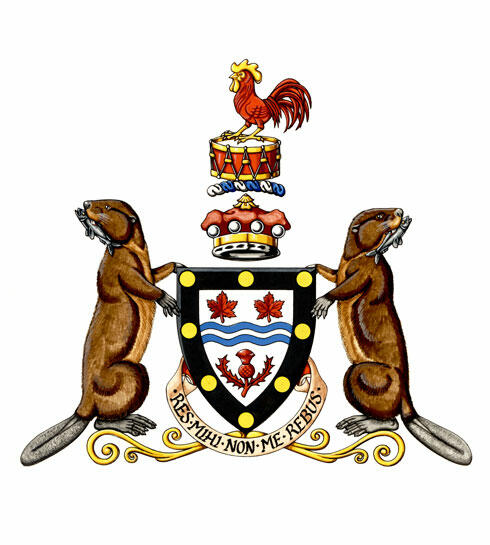
Beaverbrook Coat of Arms: Centered around the Beaverbrook Crest, the top depicts a young red rooster upon a drum which can be found in Fairbairn's Book of Crests, 1905 ed. The supporters on either side are a set of regardant beavers holding proper fish in their mouths. (Beaverbrook's friend Rudyard Kipling infamously wrote of the creatures on Beaverbrook's own coat of arms; "your beavers don't beave enough" [MG H 213, item 139].) Symbolically, the beaver denotes industry, perseverance and determination. It was officially adopted as Canada’s national symbol in an Act by the Canadian parliament in 1975 and is often found in arms granted to families connected in some way to Canada. Fish can have a variety of symbolism, including generosity of mind, spiritual nourishment, and force of industry. The motto banner at the bottom reads; Res Mihi Non Me Rebus. This Latin phrase means “I suit life to myself, not myself to life.” It was created by the College of Arms, London and recorded at the College of Arms, London, England, 10 February 1917.
Details: Combining images from both New Brunswick and Beaverbrook heraldry, the UNB coat of arms consists of a red background with two beavers on either side of the Book of Learning, which is inscribed with the university's motto Sapere Aude ("Dare to be wise"). The beavers represent Lord Beaverbrook, UNB's first chancellor, while the Book of Learning represents education and knowledge. The black ship on a gold background at the base is drawn from the New Brunswick coat of arms.
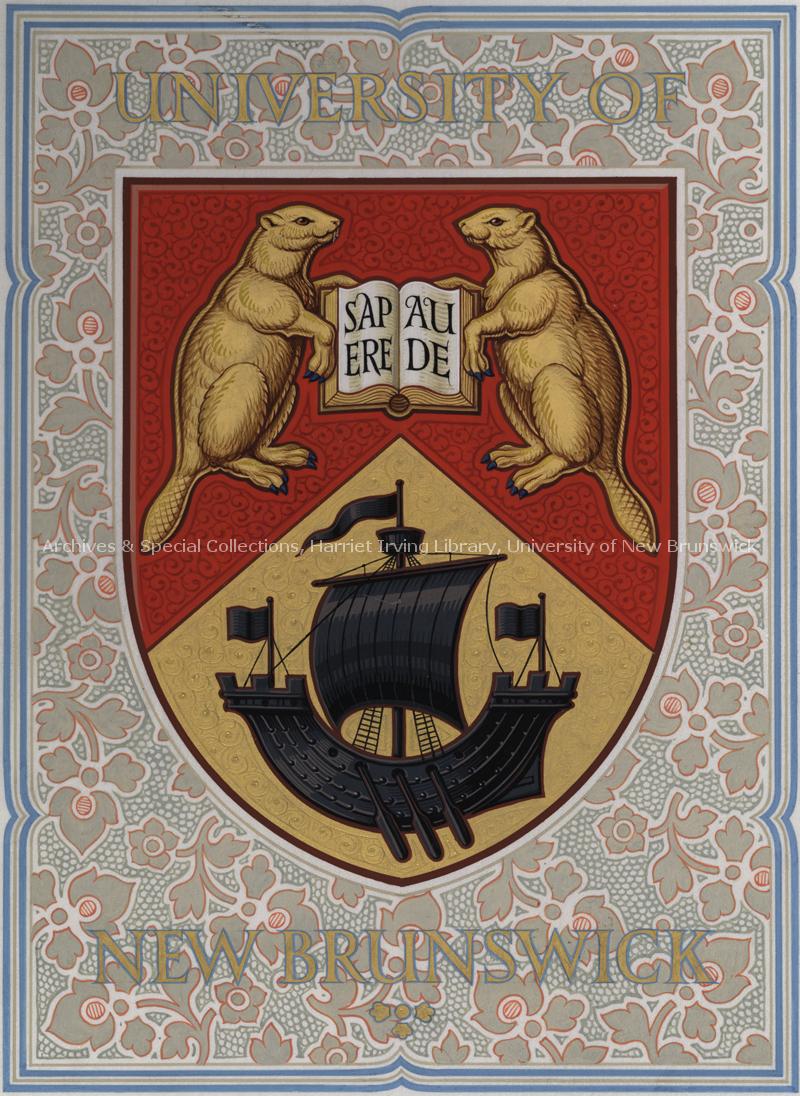
History: Initiated by Beverley Macaulay in May 1953, the senate approved a committee to create a coat of arms for the university which, under the name of the University of New Brunswick, had never received a grant of arms. After years of debate and multiple attempts to find an agreeable design, the senate committee submitted a final design and was officially approved by the College of Heralds in May 1956. The coat of arms is used for formal occasions, such as on diplomas, transcripts, official invitations, and for ceremonial purposes, including Encaenia.
In 1932, President C. C. Jones sent a version of the 1864 seal to Ottawa as UNB’s coat of arms to be included in the Canadian Book of Remembrance, which was placed in the Memorial Chamber of the Peace Tower. In 1996, the UNB coat of arms was “repatriated” at a ceremony at Rideau Hall. Governor General Romeo LeBlanc presided over the registration of the symbol with the Canadian Heraldic Authority.
Source(s):
- UA Case 128; Section 2; File 7.
- UA Case 128; Section 2; File 2.
- Montague, Susan. A Pictorial History of the University of New Brunswick. University of New Brunswick, 1992, p. 152-153.
-
BC-MS (MG H 213) William Maxwell Aitken (Lord Beaverbrook, 1st Baron) Collection of historical manuscripts, item: 139 (Rudyard Kipling to Lord Beaverbrook, Sussex, 12 April 1917).